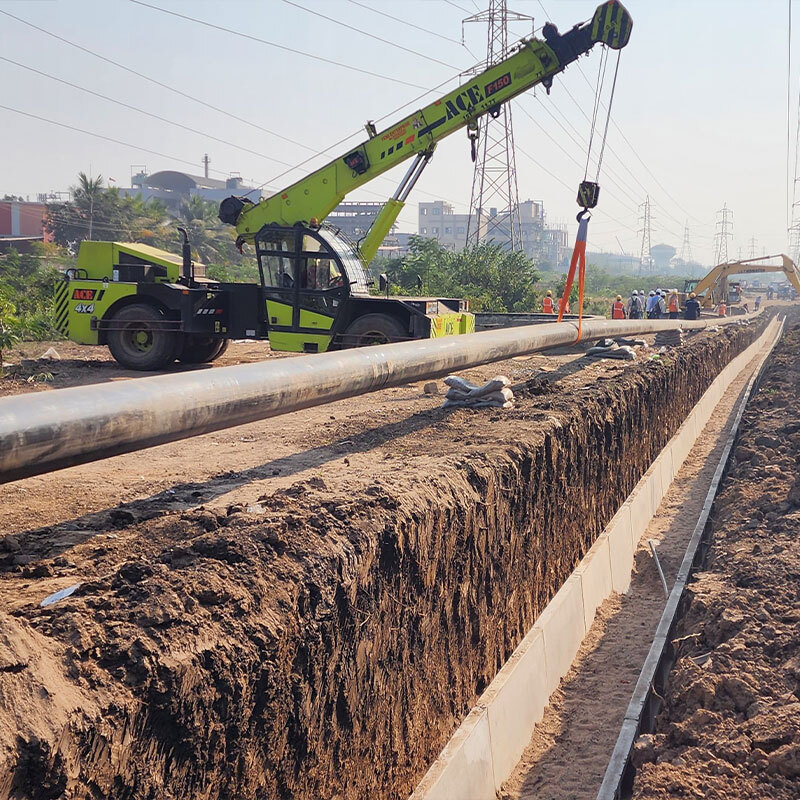
Kataria Constructionundertakes execution of oil and gas pipeline projects on EPC basis, involving laying including OFC, horizontal direct drilling (HDD), testing, pre commissioning and commissioning of pipelines.
Till date Kataria construction successfully completed Laying, Testing and commissioning of over 200 Kms of Oil, Gas and Hydrocarbon Cross Country and CGD pipeline Projects Up to 18 in diameter through the toughest of terrains and across varied geographical Zones.
Expertise includes below services
- Pre-design Survey
- Designing & Engineering
- Procurement of Materials & Handling
- Installation
- Testing & Commissioning
- Monitoring & Maintenance
Engineered for Extreme Conditions
Designed for the oil and gas sector, our pipelines handle pressures up to 3000 PSI and temperatures from -20C to 120C, making them perfect for both harsh and moderate climates across India. Advanced coatings, including epoxy and 3LPE, help shield the pipeline from corrosion, ensuring dependable performance for years.
Flexible End Connections for Easy Installation
Choose between welded or threaded end connections to suit your specific project needs. Welded options offer a permanent, leak-proof solution, while threaded ends allow for quick assembly and maintenance, minimizing operational downtime and installation challenges.
Superior Corrosion Protection
With robust external epoxy or advanced 3LPE coatings in black or grey, our pipelines excel in fighting corrosion. This layer of protection significantly reduces maintenance requirements and prolongs pipeline life, making them an ideal choice for challenging operational environments.
FAQs of oil and gas pipeline:
Q: How do I select between welded and threaded end connection types for my pipeline project?
A: Choosing the right end connection depends on your installation requirements. Welded ends are suitable for permanent, high-integrity joints, while threaded ends are ideal for applications where disassembly or frequent maintenance might be needed.
Q: What is the benefit of using external epoxy or 3LPE coating on pipelines?
A: External epoxy or 3LPE coating provides superior corrosion resistance, shielding the pipelines from environmental factors like moisture and chemicals. This extends the lifespan of your pipelines and reduces maintenance costs.
Q: When is it appropriate to use these pipelines in oil and gas projects in India?
A: These pipelines are suitable for projects requiring operation up to 3000 PSI and temperatures from -20C to 120C, making them ideal for various climates and applications within Indias oil and gas industry.
Q: Where can these high-corrosion resistant pipelines be installed?
A: Our pipelines can be installed in both onshore and offshore locations, including refineries, processing plants, and transmission networks where durability and high corrosion resistance are critical.
Q: What is the typical process for installing pipelines with welded or threaded connections?
A: Welded connections involve precise onsite welding to create a permanent joint, while threaded pipelines are assembled by screwing the pipe sections together. Our installation teams follow stringent quality standards to ensure safe, reliable operation.
Q: How does the high operating pressure and broad temperature range benefit my operation?
A: Operating up to 3000 PSI and within -20C to 120C ensures resilience and reliability under diverse operational conditions, reducing the risk of leaks, bursts, or failures in demanding environments.